
—Case study · Build and sustain
How an Indian stationery brand turned its YouTube channel from ad films into a series built for parents
A live, expert-led handwriting series in Hinglish, with AI handling the research, scripts and packaging.
210,890
views from 22 videos in eight weeks
997
hours watched
+71%
Shorts view growth, week four to week eight, zero ad spend
92%
of Shorts views from viewers aged 25 to 44
A leading Indian stationery brand had a large YouTube channel, but almost all of its most-watched videos were ads. In eight weeks of publishing, 22 videos reached 210,890 views and 997 watch hours, with the long-form films boosted by YouTube ads. The Shorts grew 71% between week four and week eight with zero ad spend, and 92% of Shorts views came from viewers aged 25 to 44, the age range the series was built for.
The challenge: a big channel with no reason for parents to come back
The brand's channel was large and well known, and it published around three videos a week. But its most popular videos were all ads, including a 21-second product ad with 1.9 million views.
When the ads stopped, so did the conversation. A parent searching “why is my child's handwriting not improving?” found nothing on the channel to answer them, even though that is the problem the brand's pencils are bought to solve.
Making more content the traditional way was also harder to justify. When every episode is made from scratch, with many handoffs and a new edit for every language, content becomes a rising cost rather than an asset.
The research: four signals pointed the same way
Before shooting a single frame, we asked what the market was missing.
- 1Ads fade, owned content keeps paying back. A leading Indian consumer brand's ad films had 60 to 117 million lifetime views but now earn only one or two views an hour. Its owned series, posted five months earlier, still pulls up to 167 views an hour with no spend behind it.
- 2Content at scale already works in the category. The stationery category leader has built a multi-million-subscriber channel on around 10 videos a week of factory tours and product demos. Competing on volume was not the answer. The question was where to compete.
- 3One open position: teaching handwriting. One Hindi-alphabet video had 3.14 million views, and an A-to-Z video scored 23.5 times its channel's normal views. Creators teach handwriting, but no Indian stationery brand does, and no one speaks to parents. The category leader's long-form videos also earned 17.7 times fewer views than its Shorts, which left long-form teaching open.
- 4The parent's own words. vidIQ outlier analysis showed which topics and hooks beat their channel's normal views. Social listening captured what parents actually worry about, such as “wrist hurting after 5 min” and “which pen is best?”. A topic went to scripting only when it scored on both.
| Channel | Made for kids | Teaches handwriting |
|---|---|---|
| Stationery category leader | No | No |
| Creator A (Shorts) | No | Yes |
| Creator B (calligraphy) | No | Yes |
| Creator C (reviews) | No | No |
| Our client's new series | Yes | Yes |
What we did: live production, made smarter with AI
The series was shot live with a real handwriting expert and a host, podcast-style, in Hinglish. AI did the research and packaging work around the shoot, where it saves the most time without touching trust.
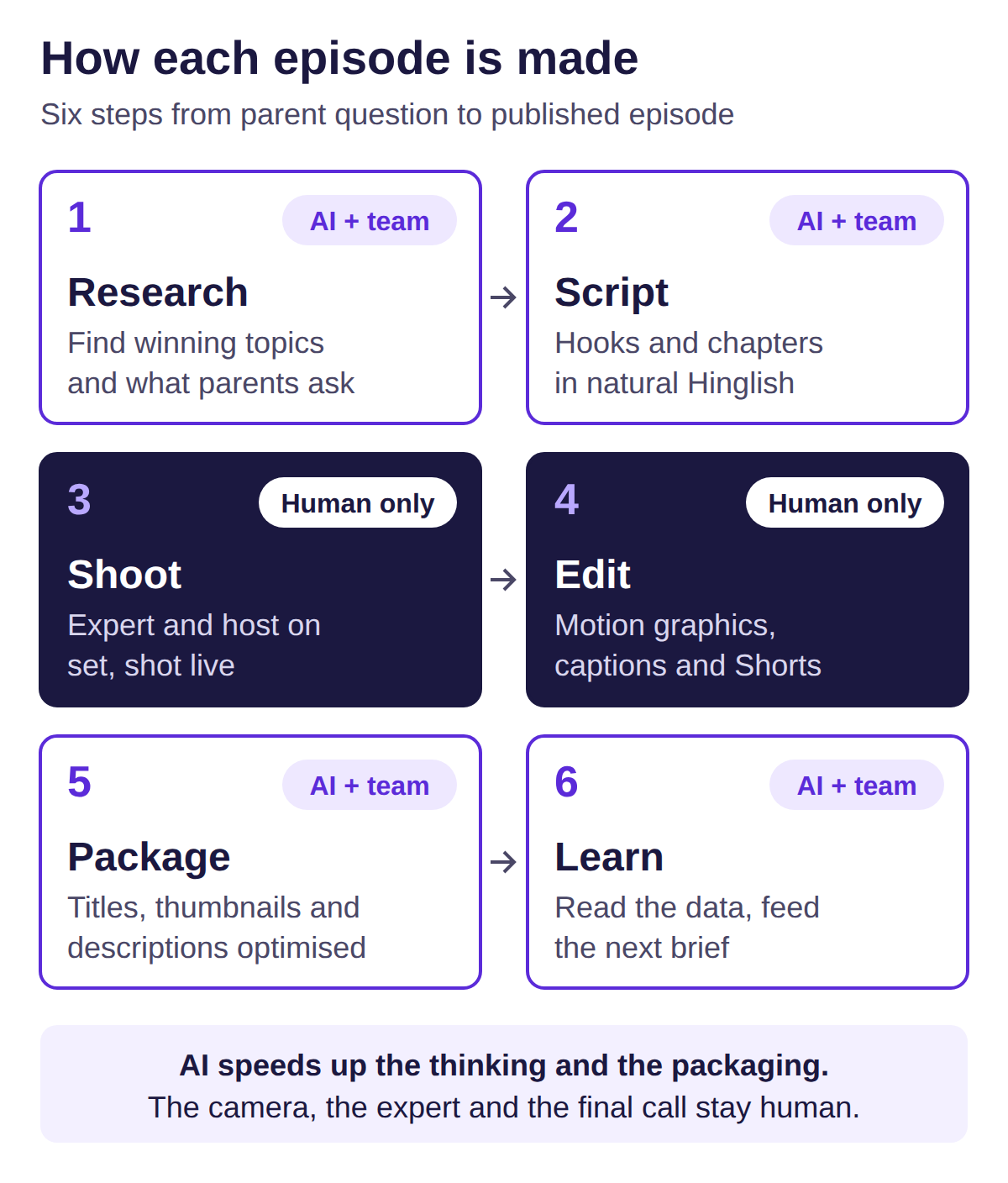
- 01
Research that decides every topic
Outlier data and parent comments decided every topic and every hook. Nothing was scripted on instinct alone.
- 02
Scripts from a detailed brief, not one line
Claude drafted each script from a structured brief: a validated topic, the brand voice with three to five past scripts, a target of watch time and retention, and the language, hook style and number of Shorts to cut. Our team edited every line.
- 03
Thumbnails built with AI, picked by people
ChatGPT generated the concepts and Nano Banana the images. Each brief paired the parent's main pain point with a curiosity gap, and the team picked the option most likely to earn the click.
Each chapter follows the same arc: symptom, reason, science, a simple analogy, the fix, and a takeaway. A new curiosity hook lands every two to three minutes. The brand is named only after the fix, so the series helps first and sells second.
The toolkit: vidIQ, Claude, ChatGPT, Nano Banana, Adobe Premiere Pro and Adobe After Effects.
Results: 22 videos, 210,890 views, 997 hours watched
| Measure | Result (24 July to 19 September 2026) |
|---|---|
| Total views | 210,890 (long-form 187,772, Shorts 23,118) |
| Hours watched | 997 |
| Comments on the long-form films | 1,877 |
| Likes | 2,378, with a 100% like ratio on Shorts |
| Average share of each Short watched | 37.6% |
| Shorts views from viewers aged 25 to 44 | 92% |
| Shorts view growth, week four to week eight | +71%, with zero ad spend |
The long-form films were boosted with YouTube ads, with the main ad flight behind the science-led film. The Shorts grew entirely on their own.
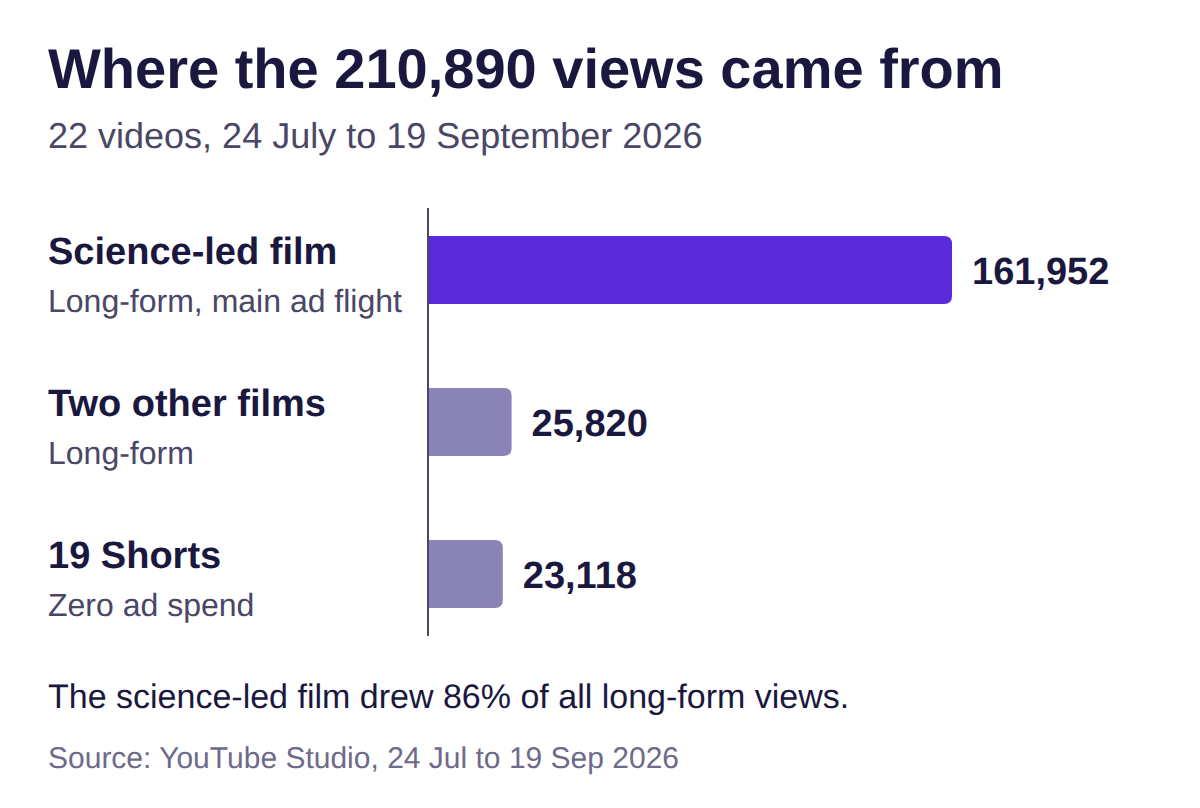
The science-led film won on click rate, then carried the ad flight
Four weeks in, a science-led film on how the brain learns handwriting led the three on click rate and retention. We put the main ad flight behind it, and it reached 161,952 views by 19 September.
Over the full period its click rate was 2.25%, against 1.94% and 1.18% for the other two films, and organic viewers watched for an average of 1 minute 54 seconds to 2 minutes 33 seconds. Curiosity-led, science-first framing earned more clicks than problem-led titles.
Problem-fix Shorts grew with zero ad spend
The Shorts reached 13,541 views in four weeks and 23,118 by week eight, a 71% rise with no ads. The best Short, a quick fix for bad handwriting, earned 3,108 views, with viewers watching 54.8% of it on average.
Problem-fix hooks and quick tricks, such as telling b from d and correcting pencil grip, were the winning formats.
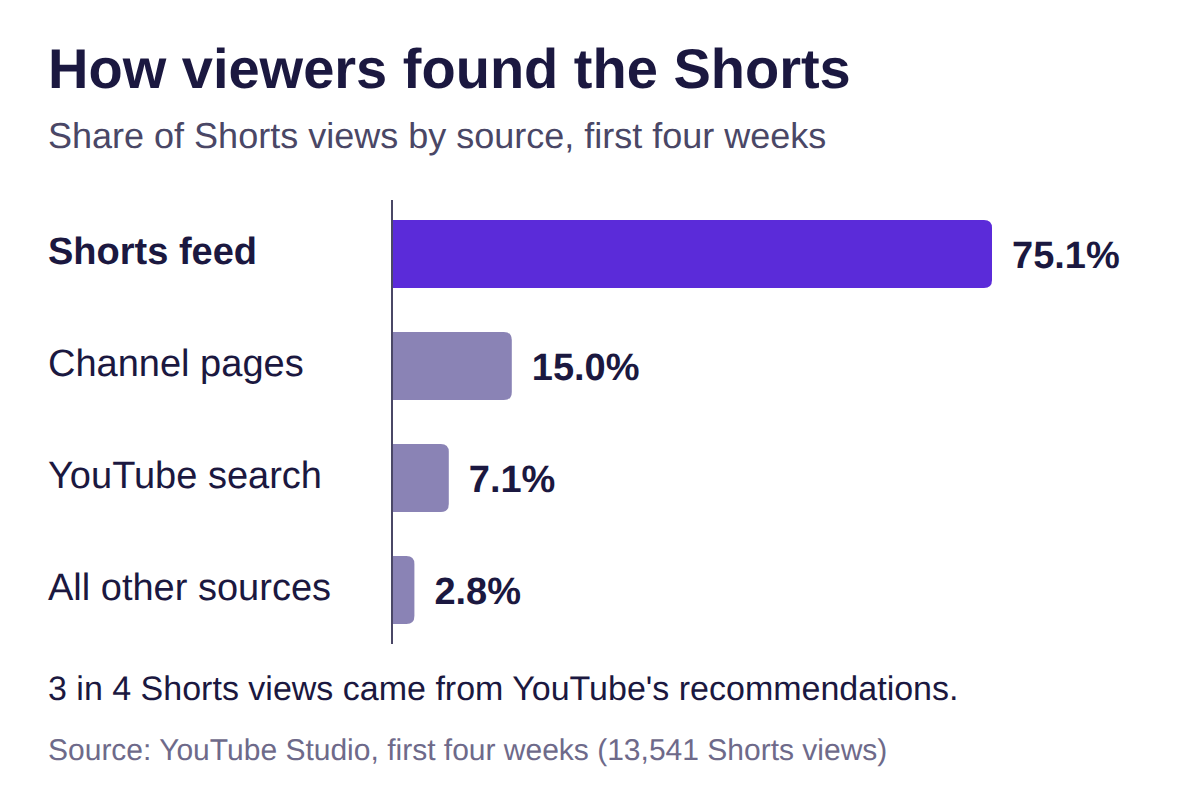
YouTube's algorithm recommended the Shorts on its own. A further 15% of views came from channel pages, as viewers explored more of the series. Viewers who arrived from YouTube search were the most engaged, watching 27 seconds on average.
The right people watched, in the right cities
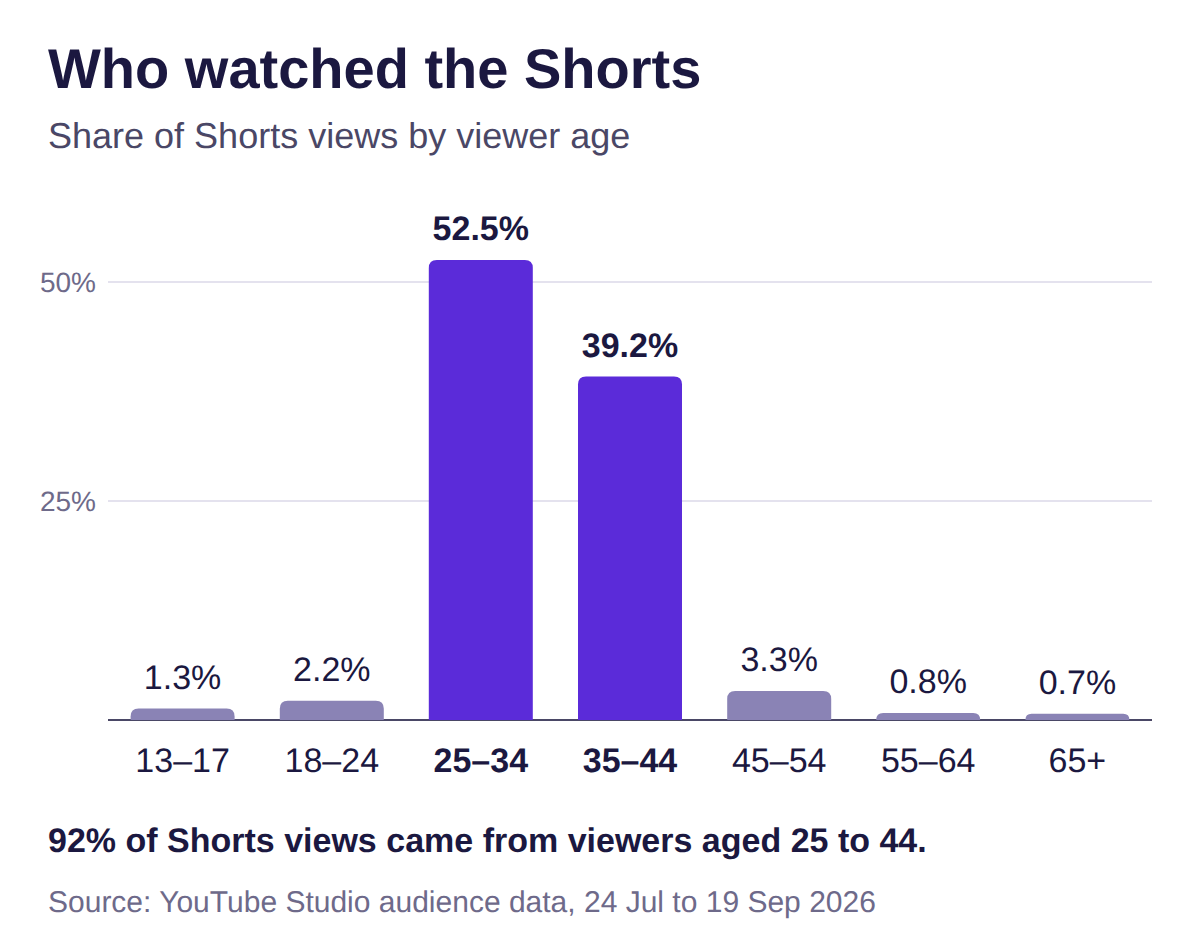
- Women accounted for 44.3% of Shorts views and 49% of watch time.
- Top cities spanned metros and Tier 2 cities: Delhi, Hyderabad, Chennai, Bengaluru, Mumbai, Patna, Jaipur, Pune, Lucknow and Indore.
- A surprise: viewers aged 45 to 64 watched 57% to 60% of each Short. Older viewers are the next audience to test.
Ads made the spike. Shorts hold the baseline.
The science-led film's ad flight produced around 158,000 long-form views across 14 and 15 September. The Shorts, with no spend at all, kept a steady 100 to 300 organic views every day, weeks after launch.
Paid media makes the spike. Owned content keeps the daily baseline going.
What the data told us to improve
| What we saw | What we are doing next |
|---|---|
| 23,100 Shorts views brought in only 18 subscribers | A subscribe prompt in the last three seconds of every Short, plus a pinned link to the long-form film |
| Long-form thumbnails were clicked 1.77% of the time | Test two to three thumbnail versions for every film |
| Some ad views came from outside India | Focus ads on the Indian metros where the Shorts already perform |
| The science-led film and problem-fix Shorts won | Next 30 days: one science-led film and eight Shorts in the two winning formats |
The 30-day targets: Shorts watched at 37.6% or more, a film click rate of 2.25% or more, and at least one subscriber per 500 organic views.
How a 90-day pilot could work for your brand
| Phase | Focus | What happens |
|---|---|---|
| Days 0 to 30 | Design the pilot | Pick one problem your customers search for, set the show format, lock consents and build the topic bank |
| Days 31 to 60 | Build the line | First episodes and Shorts go live, with a human check at every step. We measure hooks and watch time |
| Days 61 to 90 | Scale what works | More languages and cut-downs, ads retargeting engaged viewers, and one dashboard for results |
What we measure: cost per video, watch time, search visibility, retargeting audience size and sales-ready leads.